Lord Brechin’s Regiment of Horse
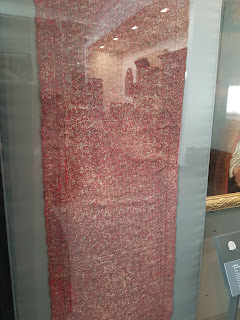
Inspired by last summer's holiday to Scotland, and in particular the imagery on display at the West Highland Museum, Fort William, may I present Lord Brechin's Regiment of Horse.
I realised that my Scots fielded lancers and harquebusiers, but there was no pistoller/Moss trooper type unit (lightly armoured with buff coats and armed with pistols). So here they are: oodles of headswaps for Scots blew bonnets, and a little bit of filing to remove chest and back armour.

George Maule, Lord Brechin, spent most of the Wars abroad, only returning to Scotland when he was commissioned as a colonel of horse, and ordered to raise a regiment of horse in Forfarshire, the Mearns and Aberdeenshire on the 28th February1649. His goal was 480 men, by the end of July he had managed to raise just 160. Early in August the Estates ordered the levying of more men, exact figures actually raised are difficult to establish (390 more men were to be raised but this total figure was split between Brechin and the Master of Forbes).
 |
 |
Those troopers that survived, and escaped from Dunbar, hid out in and around Angus until April 1651. It is from this period that I depict them as Mossers.
Many of the troopers who escaped Dunbar became the first Moss Troopers, a term first used in the 1640s, it is not until after Dunbar that the term becomes used more commonly. The term originally meant that they were found in the wild mosses of Southern Scotland, not the cross border cattle rustlers that we associate the term with.
In October 1650 Charles II signed the National Covenant, and attempted to rally forces to his cause. This is known as 'The Start', and effectively was the opening move of the Third Civil War. The Scots were initially reluctant to join Charles's cause, and Charles abandoned his attempts and fled. The regiment's Lieutenant Colonel Nairn would find Charles II hiding in a cottage at Clova.
The regiment joined Leslie's army and was under the command of Sir John Browne. They would skirmish at Newtyle against the Scots Royalists under Middleton, unfortunately half the regiment deserted to Middleton.
In May 1651 the regiment became part of Leslie's 1st Cavalry Brigade and were quartered in Fife. In June they were ordered to Stirling. They would fight at Inverkeithing, where Brechin was wounded.
Scandalous behaviour dogged the regiment later in the year: allegations of rape, and the seizure of £25 in Leith.
 |
The following year, the regiment were quartered in northern Scotland, before Brechin made his peace with General Monck. Brechin seems to have not taken any further prominent part in public affairs. He succeeded his father in 1661.
 |
| Colonel's colour illustrated by Fitzpayne Fisher (MS Harl. 1460) reproduced in Reid's "Covenant for Religion Croune and Kingdome" (Partizan Press) |
Figures are all from Peter Pig: pack 22 'cavalry + helmet + pistol'; pack 24 'cavalry + hat + pistol'; and the dragoon officer from pack 73 'dragoon mounted command (flag). Command is from pack 27 'cavalry command + helmet'. Not an original head surviving, including that of the casualty marker.
 |
Brechin would spend the rest of his life building a new house at Panmure from the designs of John Milne, the King's master-mason, and writing a history of William Wallace. He died in Edinburgh in March 1671 and was buried at Panbride Church.
If you enjoyed reading this, or any of the other posts, please consider supporting the blog.





Comments
Post a Comment